
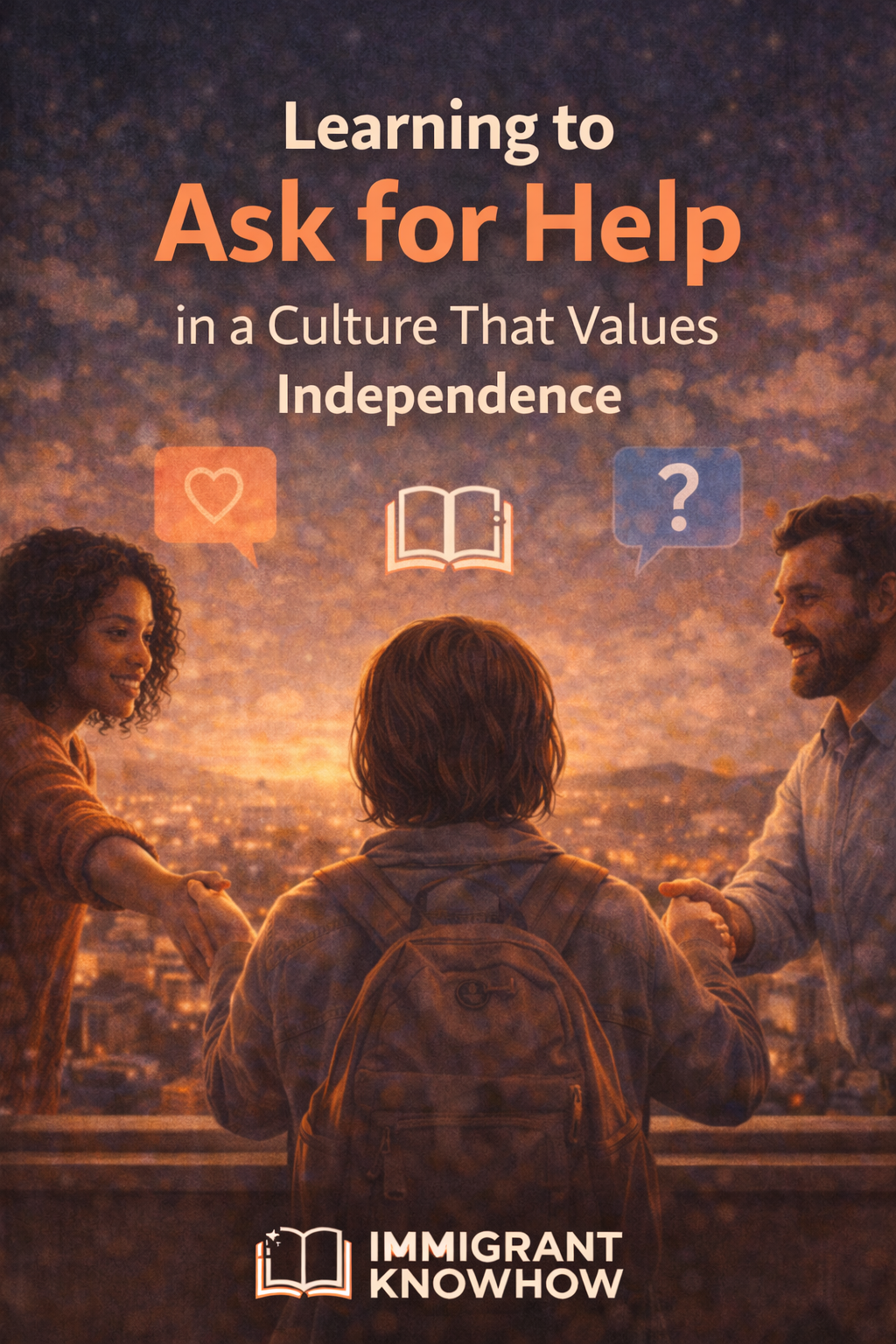
For many immigrants, asking for help does not come naturally. It can feel uncomfortable, risky, or even shameful. You were taught to be strong, self sufficient, and resilient. You learned early that survival meant figuring things out on your own.
Then you arrive in a new country where independence is praised, but the systems are complicated, unfamiliar, and often unforgiving. You are expected to advocate for yourself, ask questions, and request support. And yet, doing so can feel like admitting failure.
This internal conflict is one of the quietest struggles immigrants face, and one of the hardest to unlearn.
Why Asking for Help Feels So Hard
Many immigrants come from cultures where help is offered quietly or within close family circles. You do not ask strangers. You do not question authority. You do not expose confusion in public spaces.
In a new country, those instincts can work against you. Doctors expect you to ask clarifying questions. Employers expect you to speak up. Schools expect parents to advocate for their children. Government systems assume you will request information rather than wait for it.
When you do not ask, people assume you understand. When you struggle silently, no one sees it.
At the same time, asking for help can trigger fear. What if you are judged. What if you are seen as incompetent. What if your question reveals how unfamiliar you are with the system.
So you stay quiet. You struggle alone. You spend hours figuring things out that could have taken minutes with the right support.
The Cost of Doing Everything Alone
Trying to handle everything by yourself comes with a price.
You miss opportunities because you did not know they existed.
You make avoidable mistakes because no one explained the process.
You carry stress that could have been shared.
You feel isolated even when surrounded by people.
Over time, this isolation can affect confidence and mental health. You may begin to believe that struggling is normal and that ease is something other people get, not you.
But struggling alone is not strength. It is often a sign that the system is unclear, not that you are incapable.
Stories of Learning to Reach Out
Ana moved to the United States for work and avoided asking questions at her job. She worried she would appear unqualified. Months later, she learned that her coworkers regularly asked for guidance and saw it as collaboration, not weakness. “I realized I was holding myself to a harsher standard than anyone else,” she said.
Mohammed helped his family navigate healthcare for years without outside support. When a community worker finally offered assistance, he felt relief mixed with guilt. He had been carrying responsibility that was never meant to be his alone.
Elena struggled with her child’s school system because she did not want to appear demanding. Once she asked for a meeting, she discovered resources that had always been available but never clearly explained.
These moments show how much changes when immigrants give themselves permission to ask.
Reframing Help as Strength
Asking for help is not a sign that you do not belong. It is a sign that you are learning how things work.
Here are ways to begin shifting that mindset.
- Start with small questions. Confidence grows with practice.
- Remember that systems are designed to be navigated, not memorized.
- Separate self worth from understanding. Not knowing does not mean you are less capable.
- Seek help from people and organizations that exist to support newcomers.
- Allow yourself to receive support without guilt.
At Immigrant KnowHow, we believe clarity is a form of empowerment. That is why we create resources that answer common questions clearly and encourage immigrants to seek support without fear or shame.
You Were Not Meant to Do This Alone
Immigration is complex by design. No one is expected to navigate it perfectly without guidance. Asking for help does not erase your independence. It strengthens it.
You are still resilient. You are still capable. You are still strong. You are simply choosing a smarter, more sustainable way forward.
At Immigrant KnowHow, we are here to walk alongside you, answer the questions you were afraid to ask, and remind you that needing support is part of being human.
Join Immigrant KnowHow for clear guidance, supportive community, and practical tools that help you navigate your new life with confidence and without carrying the weight alone.